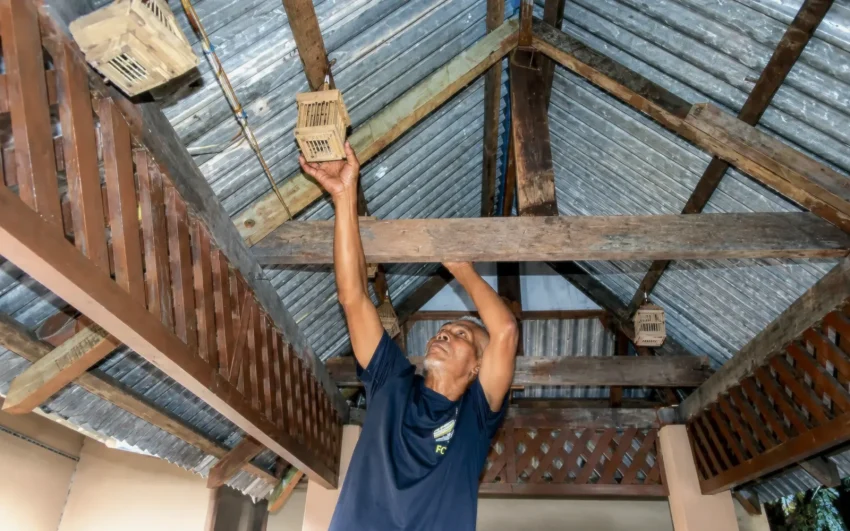

JERTIH: By day, Ramli Sulaiman works with timber. In his spare time, he builds tiny homes for some rather noisy occupants.
The 62-year-old carpenter from Kampung Gerai Tua has turned his fondness for bush crickets – known locally as belalang rusa or belalang kerek – into a thriving side business making cages for fellow enthusiasts.
Using wood and sago palm stems, Ramli crafts each cage by hand, tailoring it to the needs of hobbyists across Besut.
Demand has grown alongside the popularity of grasshopper sound competitions, where the insects are judged on the quality of their distinctive calls.
For serious competitors, a good cage is more than a decorative accessory: it needs to keep its tiny resident comfortable, active and ready to perform.
“The design is important,” Ramli told Bernama. “It must provide good ventilation, adequate space, and protection from heat and rain.”
His wooden cages start from RM70, depending on the material used, including jackfruit wood, pine and baja hutan, or wild hardwood.
The more affordable versions, made from sago palm stems, cost between RM20 and RM25. Their light weight makes them especially popular among competitors travelling from one event to another.
Each cage takes Ramli between two and three days to complete, as he makes them around his regular carpentry work. Most are built to order.
He also brings a selection to competitions around the district, where participants gather to compare their grasshoppers’ calls and, naturally, size up one another’s cages.

Ramli is no mere supplier – he is also an enthusiastic competitor. Events are regularly held in villages such as Kampung Telaga Nibong in Hulu Besut and Kampung Gerai, drawing grasshopper lovers from across the district.
Over the years, Ramli has brought home his fair share of prizes. “I have won many competitions,” he shared happily. “The prizes have included pillows, thick blankets and kitchenware.”
Some he kept, some he passed on to family and friends, and the rest he sold – a practical solution to the pleasant problem of having more household prizes than one person could possibly need.
Beyond friendly rivalry, Ramli believes the competitions play an important role in bringing rural communities together.
They also create small but meaningful business opportunities for cage makers, grasshopper-feed suppliers and traders selling food and other goods at the venues.
More importantly, Ramli hopes the pastime will continue to be passed down and enjoyed.
For him, the cheerful chirping of a prized grasshopper is not merely background noise: it is part competition, part community tradition – and, with the right cage, a surprisingly lively little business.