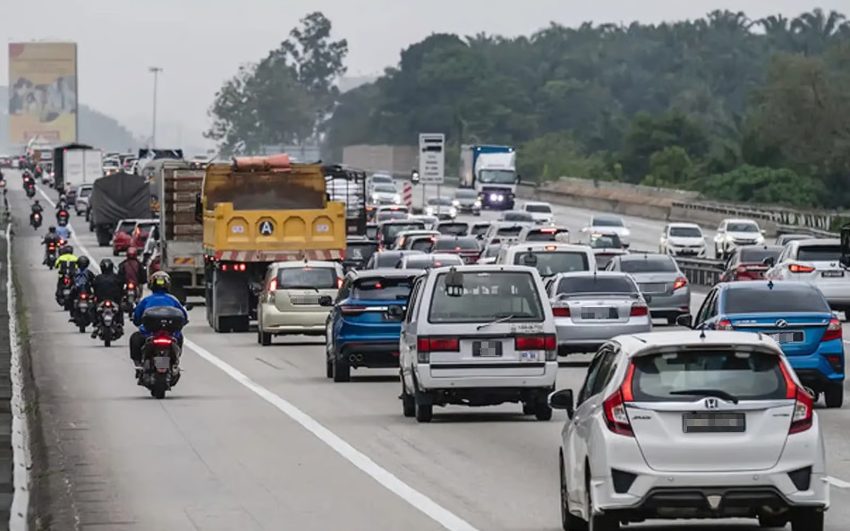
To say that the Elite Highway is congested is an understatement. Bursting at the seams is more like it. Anyone who regularly travels to KLIA Terminal 1 or 2 from Damansara, Elmina, Shah Alam, Subang Jaya and surrounding areas knows the frustration.
A journey that should take a reasonable amount of time can now easily stretch towards two hours, particularly during peak periods, weekends and festive seasons. And it is not just traffic heading to KLIA. Travelling in the opposite direction, coming from KLIA, can sometimes be even worse.
Perhaps the Elite highway should now be renamed the “Elite Turtleway”.
A 30-year gap
Built in the mid-1990s and completed in October 1997, the Expressway Lingkaran Tengah, or Elite, was a well-conceived project for its time.
It was designed primarily to provide a fast and direct connection to the then-new Kuala Lumpur International Airport in Sepang from the North-South Expressway, as well as from Shah Alam, Subang Jaya and the western Klang Valley.
But that was almost 30 years ago, when Elite had only seven interchanges.
Since then, the Klang Valley and southern Selangor have been transformed. Putrajaya, Cyberjaya, Dengkil, Bandar Saujana Putra, Gamuda Cove, Serenia City, Nilai and numerous new townships and industrial areas have emerged.
Practically every major highway in southern Selangor is now connected, directly or indirectly, to Elite.
Five additional interchanges have since been added, bringing the total to 12, along this 60km corridor between Shah Alam and Nilai, with the link to KLIA now but a secondary spur.
This raises an uncomfortable question.
Did PLUS management trade our future congestion nightmares for more interchanges? And consequently generating more highway access fee payments from developers and more toll revenue from the additional traffic generated?
There is nothing wrong with providing access to new developments. Developers need connectivity and concessionaires have legitimate commercial interests.
But there is another side to the equation. Who considered the cumulative impact of all these additional connections on the capacity of Elite itself?
The really important question, however, is not whether PLUS earned additional revenue. It is whether the concessionaire and the authorities properly accounted for the cumulative traffic impact of each new interchange.
Every new interchange may make economic and development sense for the surrounding area. But every new connection also potentially feeds more vehicles onto the same highway with the same capacity.
At what point do we stop asking how to connect more developments to Elite and start asking whether Elite can still cope with all the traffic we are putting onto it? That is the real issue.
Elite today is no longer simply an airport link. It has become a major regional distributor carrying traffic from a much wider area. And therein lies the problem.
We have continued to add development, new townships, industrial areas, interchanges and connecting highways, but we are not making it any easier for us to move. Our mobility is becoming more restricted and we are spending more time on the roads travelling over much shorter distances. In one sentence, we are creating our own mobility trap.
By right, the more we progress the more mobile we should become, and moving over shorter distances, like going to the airport, should be quick and easy, like a walk in the park.
Additional pressure from KLIA
KLIA, the main reason Elite was built, is generating and attracting substantially more traffic now due to its phenomenal growth after the pandemic.
In 2025, KLIA handled about 63.3 million passengers, with Terminal 1 alone handling 32.1 million – well above its original 25-million-passenger design capacity.
Terminal 2, which handled slightly less traffic is expected to overtake Terminal 1 in passenger numbers soon as the annual growth of passenger traffic among the low cost airlines is much higher.
More passengers inevitably mean more cars, taxis, e-hailing vehicles, buses, airport workers, logistics vehicles and other traffic accessing the airport.
So the question we should also be asking is: does the entire ground transport network, including Elite, have sufficient capacity to serve KLIA – today and into the future? Increasingly, the answer is no.
Had Elite remained primarily an airport access corridor, perhaps the current congestion would not have reached this level. But it has progressively taken on a much wider role without a corresponding expansion of capacity and alternative routes.
MEX 2: the missing alternative
The stalled MEX 2 project is also part of this story. It was planned to provide a more direct connection from the MEX 1 Putrajaya interchange to KLIA, giving motorists another route to the airport and reducing dependence on Elite.
Its failure to materialise means that traffic which could potentially have been distributed through another corridor continues to depend heavily on Elite. But completing another highway alone will not solve Elite’s long-term problem.
What we need is forward network planning and proper traffic distribution, involving not only roads but also rail and other forms of dedicated public transport.
For instance, why can’t a rail line be built to connect coastal Selangor with KLIA?
In essence, an urgent, comprehensive study is needed to determine the current and future travel demand to and through Elite, identify the demand’s origin, and determine how it should be distributed across the road and rail network.
The objective should not simply be to build more roads to accommodate more cars. The objective should be to build a transport network with sufficient capacity, resilience and alternatives – one that improves our overall mobility index and makes travelling to KLIA a smooth and predictable journey, rather than a stressful race against time.
One thing is certain: we cannot continue to assume that infrastructure built for the traffic demands of the last century will remain adequate for the needs of the 21st century.
Elite has served us well for almost 30 years. But the question now is whether we are prepared to redesign the network around the realities of today – and the demands of tomorrow.
The views expressed are those of the writer and do not necessarily reflect those of FMT.