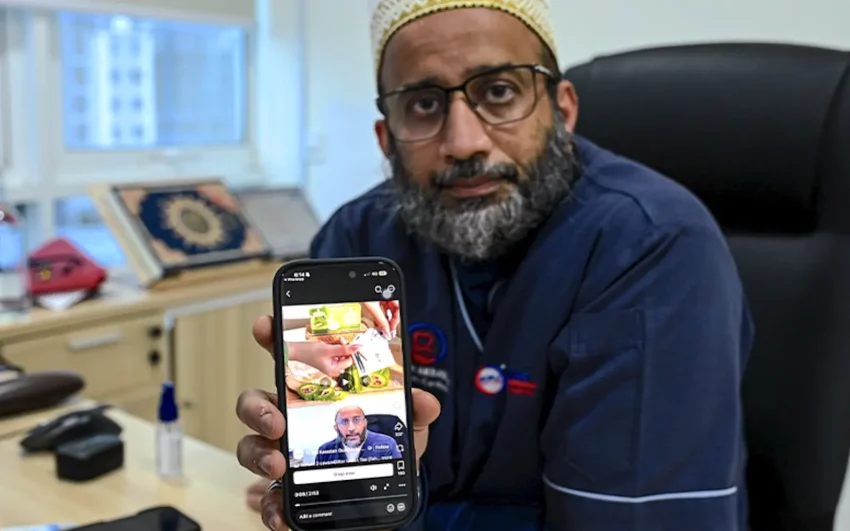

KUALA LUMPUR: The man in the video looks and sounds like consultant cardiologist Dr Onn Akbar Ali. He wears Onn’s familiar skullcap, mimics his mannerisms, and even appears to sit in front of a plaque bearing his name.
This person enthusiastically promotes a herbal tea supposedly capable of controlling diabetes “without medicine, without injections, without side effects”.
Except it isn’t Onn. The entire performance is a deepfake generated using artificial intelligence, borrowing the doctor’s face and voice to lend credibility to a product he has never endorsed.
“It disturbed me quite a bit,” the real Onn told Bernama. With hundreds of thousands of followers across his social media accounts, the cardiologist has built an audience by explaining health matters in straightforward language.
That same visibility has now made him useful to scammers hoping his familiar face will persuade people to buy dubious remedies: a danger that goes beyond embarrassment or damage to a doctor’s reputation.
“People are assuming the product is effective for a medical condition that they have, when it does nothing for their condition,” Onn pointed out.
A supposed remedy could also contain ingredients that worsen an existing health problem, while encouraging someone to delay proper treatment, he added.
Deepfake doctors are just one part of the problem. Fraudsters are also impersonating pharmacies, established sellers and healthcare professionals online – sometimes using familiar logos, similar account names, and even AI-generated documents to make their pages appear legitimate.
The health ministry (MOH) told Bernama that digital platforms, social media and messaging apps have made the sale of unregistered supplements and counterfeit pharmaceuticals increasingly difficult to control, as sellers can hide behind false identities and frequently change accounts.

From 2023 to June 30 this year, the ministry conducted 2,839 raids involving unregistered supplements and seized 1.5 million products worth more than RM75 million. Another 93 raids involving counterfeit pharmaceuticals resulted in the seizure of more than 4,000 units worth about RM85,000.
Pharmacist Rachel Gan said her pharmacy chain had discovered an online seller using its brand while offering products she did not recognise. “People are buying from the impersonator because they think they’re buying from us,” she said.
For shoppers, a convincing storefront can therefore mean very little if the person behind it is not who they claim to be.
Bargains at a cost
One 54-year-old cancer patient learnt that lesson after buying online what he believed was the same supplement he had previously received from a hospital.
The product appeared cheaper than its usual pharmacy price – but after taking it for several months, blood tests showed his liver enzyme levels had risen sharply and he’d developed liver inflammation. He was hospitalised until the levels came down.
Another consumer bought five cans of what she believed was meal-replacement powder while caring for her bedridden father. The price looked attractive, and the seller’s ratings and history seemed convincing.
What arrived instead was avocado powder.
Her experience illustrates why the usual advice to “check the seller” does not always go far enough: ratings, branding and professional-looking pages can themselves be manipulated.
Deepfake videos bring another layer of difficulty because the warning signs can be remarkably subtle. In fake videos featuring Onn, clues have included misspelled words in the background, suspicious account names, lips that do not quite match the speech, and unnatural blinking.
But these details can easily be missed by someone casually scrolling through social media.

One of the people fooled was Onn’s own brother-in-law, who believed a fake Facebook video showed Onn recommending a tea for kidney stones. He shared it with friends, some of whom bought the product.
Onn has repeatedly reported impersonation accounts and deepfake videos to social media platforms, but said the results have been inconsistent.
What can consumers do?
MOH requires registered health products to carry security features, including holographic labels, while consumers can use the ministry’s MyUbat application to scan QR codes and check product information.
Pharmacists and technology experts nevertheless argue that consumers should not carry the entire burden of spotting fraud, particularly as AI-generated material becomes increasingly convincing.
For shoppers, some basic caution still helps: be suspicious of miracle cures, unusually low prices, and doctors apparently making claims that seem inconsistent with normal medical advice.
Check whether the seller is genuine, verify registered products through official channels, and avoid relying on a social media video simply because the person speaking looks familiar.
Perhaps the most useful question when health advice unexpectedly appears on your feed is no longer simply, “Does this sound convincing?”
It may well be: “Is this person even real?”