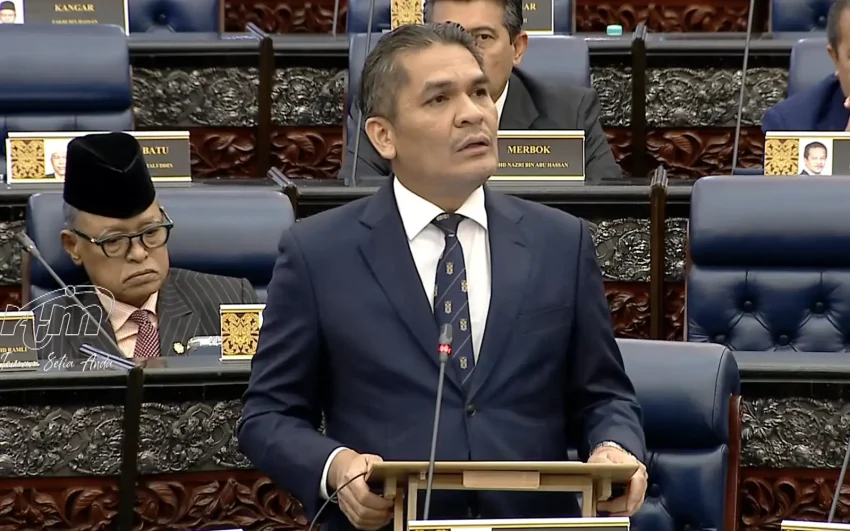

KUALA LUMPUR: The government has been urged to establish a regulatory body modelled on the Australian Prudential Regulation Authority (APRA) to strengthen oversight of institutions that manage public funds.
Radzi Jidin (PN-Putrajaya) said the body could regulate institutions such as Tabung Haji (TH), EPF, the Retirement Fund Inc (KWAP), the Armed Forces Fund Board (LTAT), and Permodalan Nasional Bhd (PNB).
He said the move was necessary as Malaysia currently does not have a comprehensive regulatory framework for non-bank financial institutions (NBFIs).
Radzi said that while specific sectors like development finance, insurance, and capital markets are supervised by Bank Negara Malaysia (BNM) or the Securities Commission Malaysia (SC), major statutory funds and credit providers are governed by separate laws and ministries.
“The government needs to establish a dedicated prudential regulatory agency to oversee the institutions mentioned earlier.
“The RCI’s recommendation that Tabung Haji’s fund management be supervised by the SC is insufficient.
“A more comprehensive approach is needed,” he said while debating the royal commission of inquiry’s (RCI) report on TH in the Dewan Rakyat.
Radzi said the government should emulate APRA and use the findings of the RCI into TH as a starting point to strengthen oversight of institutions managing public funds.
He also urged the government to consult former BNM governor Muhammad Ibrahim and regulatory experts on the proposal to establish a “super-regulatory body”.
“Muhammad’s view on the need for stronger oversight of these institutions is in line with his proposal,” said Radzi.
Meanwhile, Aminolhuda Hassan (PH-Sri Gading) also proposed the establishment of a regulator for NBFIs such as TH, EPF, PNB and LTAT.
He said Malaysia does not have a single authority responsible for prudential supervision, systemic risk assessment and governance oversight of the non-bank financial sector.
“These institutions are very important to the country’s financial system because their investment decisions affect the capital market, government financing, market stability and the nation’s economic resilience.
“This is in contrast to the banking sector, which is centrally regulated by BNM,” he said.
He also urged the government to amend the Tabung Haji Act 1995 (Act 535) to include a prohibition on active politicians being appointed as TH chairman or board members.
He added that the amendments should also strengthen the position of TH’s shariah advisory committee through statutory provisions so that its decisions have binding authority.